Public Assets is seeking:
Our next Executive Director
Please share
Please share
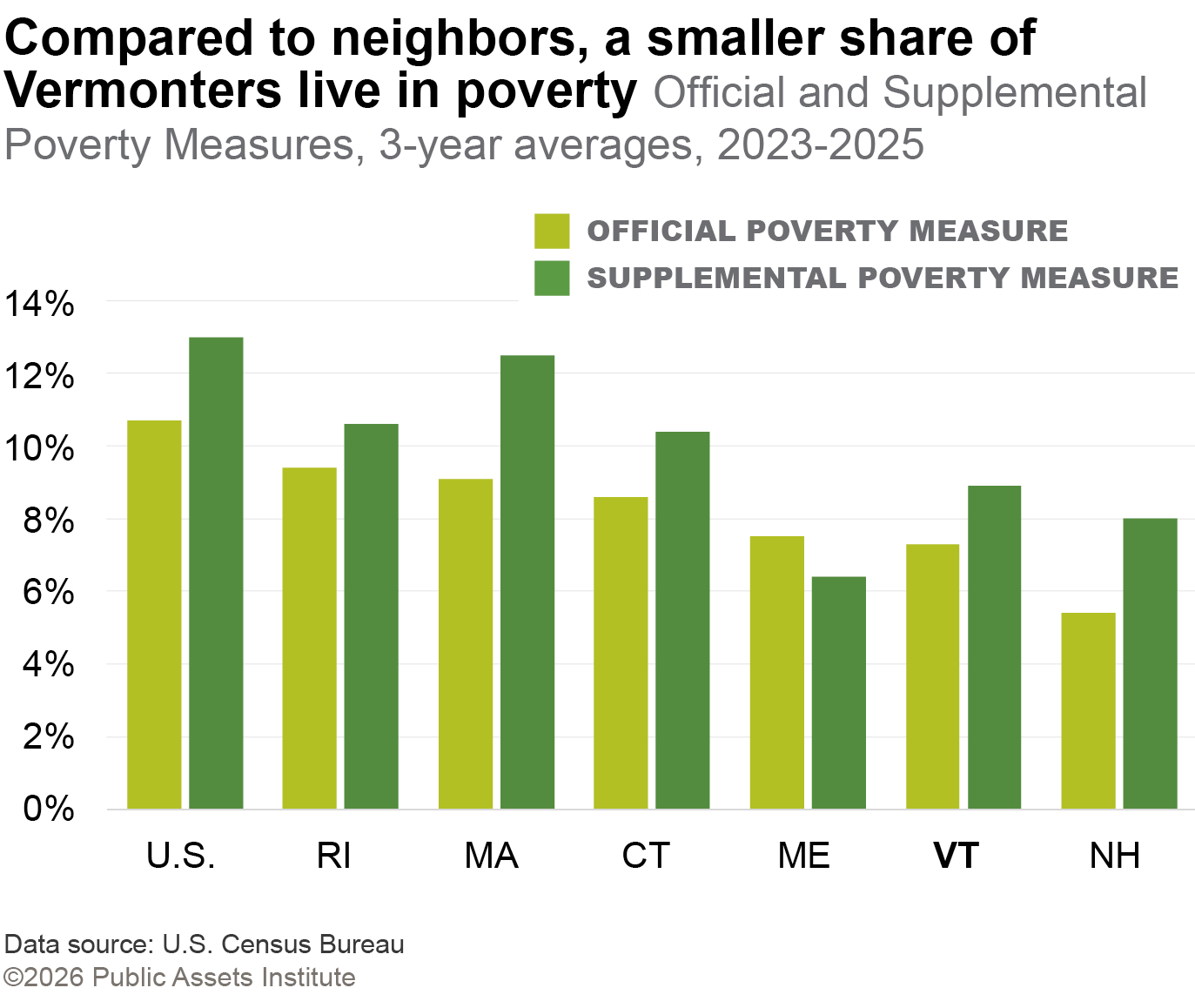
On average, 7 to 9 percent of Vermonters lived in poverty between 2023 and 2025. This amounts to 46,000 to 57,000 people, including 9,000 to 11,000 children.
These numbers are based on recent data from the U.S. Census, which measures poverty in two ways: the Official Poverty Measure (OPM) and the Supplemental Poverty Measure (SPM). The OPM compares pretax income to a national poverty threshold adjusted annually for inflation and varying by family size and members’ ages. The SPM—generally considered more accurate—factors in government supports plus childcare, taxes, local housing and other expenses, and compares the results to a threshold based on costs from five years of recent consumer expenditure surveys.
In the U.S. as a whole and all the New England states except Maine, the 2023-2025 SPM was higher than the OPM. That is the reverse of the pattern in 2019-2021, when pandemic aid pushed most New England states’ and the national SPM below the OPM.
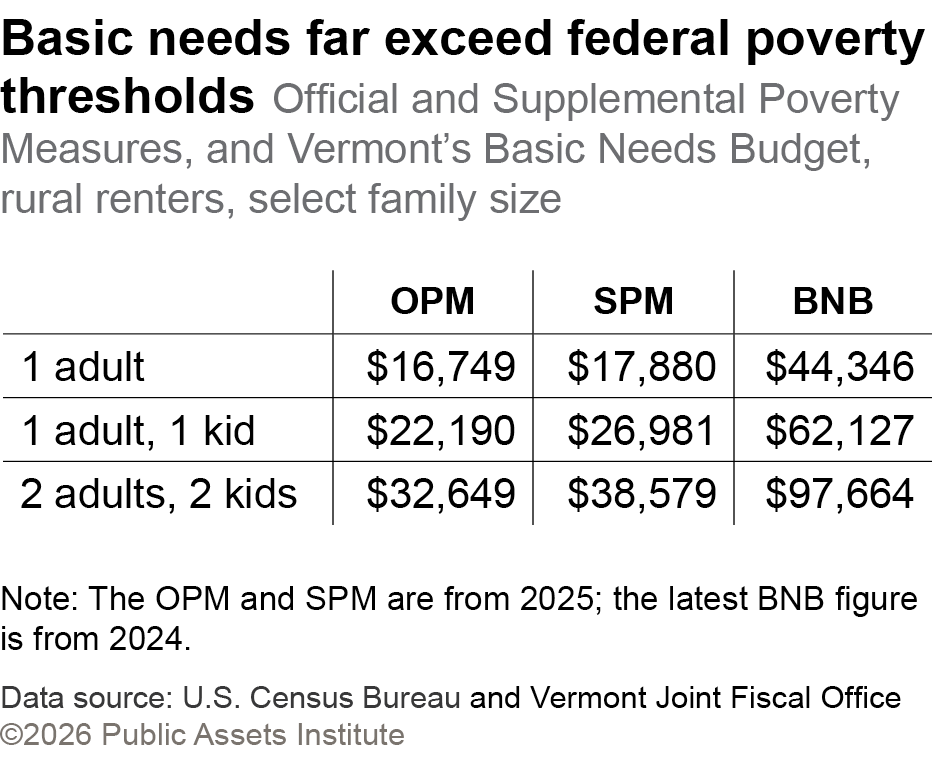
In fact, both measures may undercount the people struggling financially. Every two years Vermont’s Joint Fiscal Office calculates the basic needs budget (BNB)—the income needed to cover a more comprehensive model of basic needs, including rent and transportation. The BNB adjusts for family size and urban or rural residence. Vermont’s BNB thresholds are two to three times the federal poverty thresholds.
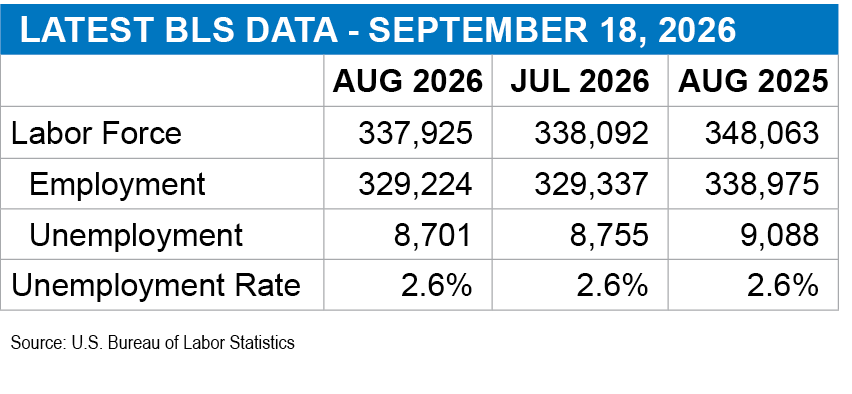
Vermont’s unemployment rate held steady in August at 2.6 percent for the seventh month in a row. Vermont had the third-lowest unemployment rate in the country.